Gimbap (Korean Seaweed Rice Rolls)
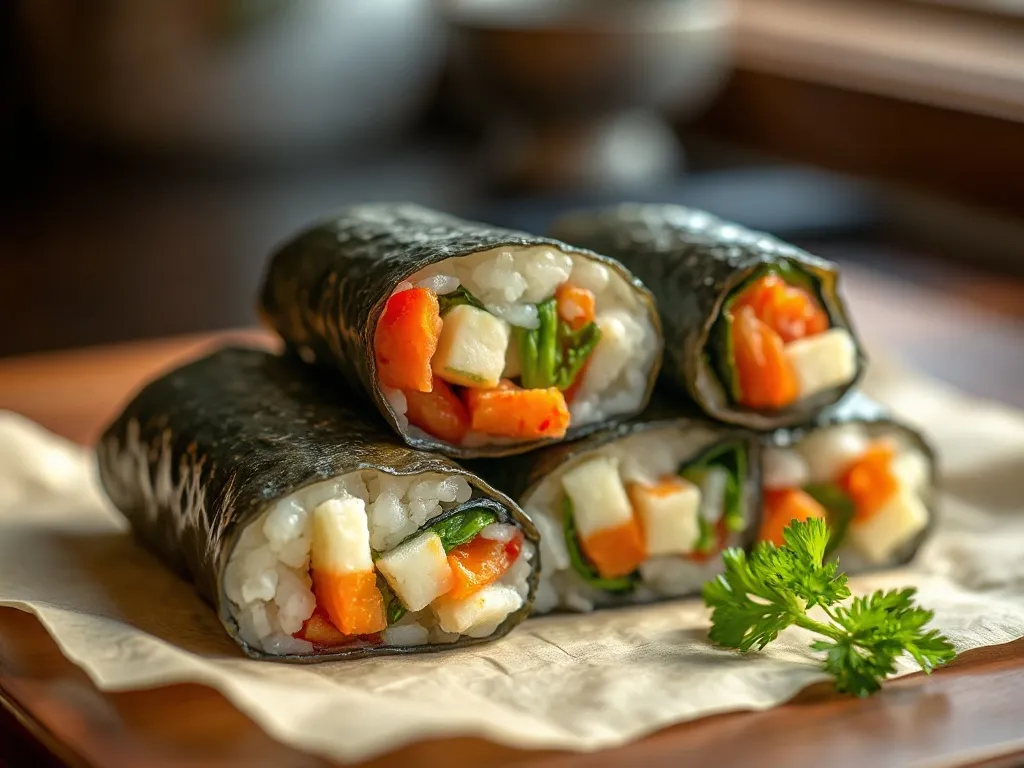
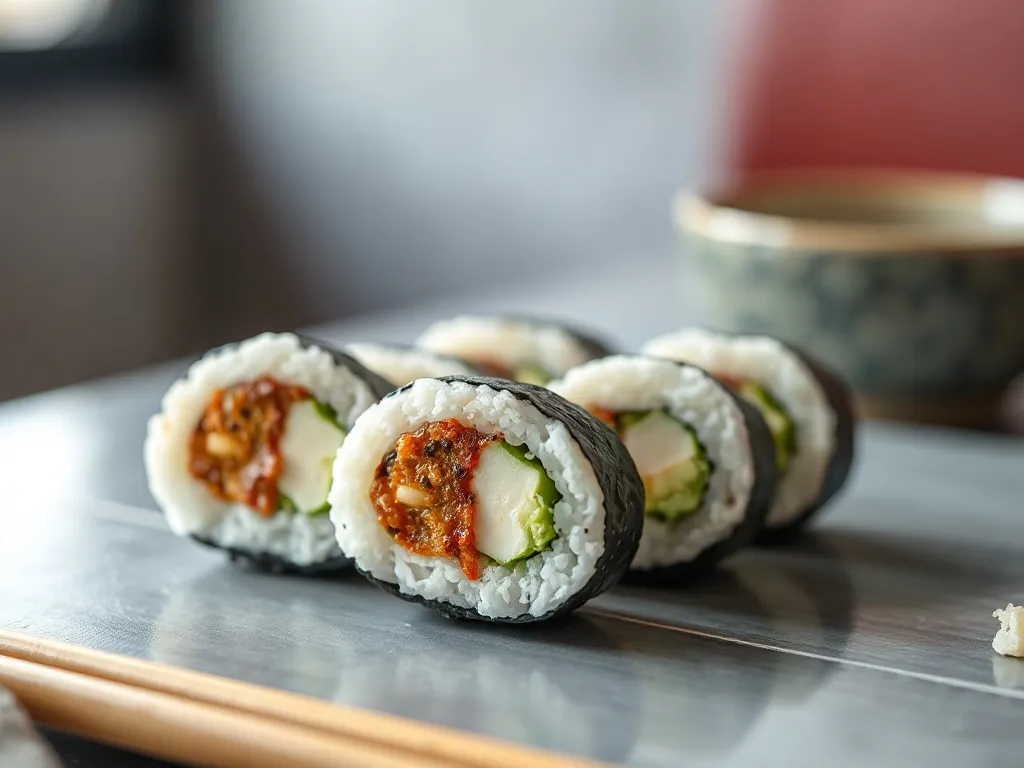
Gimbap is a Korean rice roll wrapped in toasted seaweed and packed with colorful fillings like seasoned vegetables, egg, and savory protein. Each slice reveals a beautiful spiral that is as fun to make as it is to eat. Serve it at room temperature, cut into bite-sized rounds, as a portable lunch, picnic dish, or shared snack.
- ⏱ 40 min
- 📊 medium
- 🍽 Family
Ingredients
- 3 cups cooked rice
- 4 seaweed sheets (gim)
- assorted carrot, egg, spinach
- 2 tbsp sesame oil
- 4 strips pickled radish
Instructions
- Cook short grain rice until tender, then transfer it to a wide bowl and toss gently with sesame oil and a pinch of salt, spreading it out to cool to just warm.
- Prepare your fillings by julienning carrots and sauteing them briefly, blanching and seasoning spinach, slicing pickled radish, and cooking a thin egg omelet that you slice into strips.
- Place a sheet of toasted seaweed shiny side down on a bamboo rolling mat, with the long edge facing you.
- Spread a thin, even layer of rice over the bottom two thirds of the seaweed, leaving the top third bare so the roll can seal.
- Lay your fillings in neat horizontal lines across the center of the rice, keeping the amounts modest so the roll closes cleanly.
- Lift the edge of the mat closest to you and roll it forward over the fillings, tucking firmly as you go to create a tight, compact cylinder.
- Brush the bare seaweed edge with a dab of sesame oil and press to seal, then rub a little oil over the outside of the roll for shine.
- Let the roll rest seam side down for a minute, then slice it into rounds about 1.5 cm thick with a sharp, lightly oiled knife.
- Arrange the slices on a plate, sprinkle with toasted sesame seeds, and serve at room temperature.
💡 Chef's tip
Season the warm rice with sesame oil and salt rather than vinegar, and let it cool slightly before rolling, because oily, just-warm rice holds together better and keeps the seaweed from turning soggy.
Seasoning the rice with sesame oil and salt (not vinegar like sushi) is what distinguishes gimbap; the nutty oil is the signature Korean flavor.
Nutrition (per serving)
- Calories: 340 kcal
- Protein: 9 g
- Carbs: 60 g
- Fat: 8 g